anchor
an‧chor1 /ˈæŋkə $ -ər/ 
 noun [countable]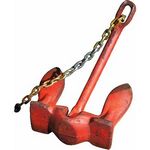
1. a piece of heavy metal that is lowered to the bottom of the sea, a lake etc to prevent a ship or boat moving
at anchor

The ship was at anchor.
We dropped anchor a few yards offshore.
The next morning, they weighed anchor (=lifted the anchor) and began to move south again.
2. especially American English someone who reads the news on TV and introduces news reports
SYN newsreader British English:
Dan Rather, anchor of the CBC Evening News
3. someone or something that provides a feeling of support and safety:
Dad was the anchor of the family.
anchor2 verb
1. [intransitive and transitive] to lower the anchor on a ship or boat to hold it in one place
SYN moor:
Three tankers were anchored in the harbor.
2. [transitive usually passive] to fasten something firmly so that it cannot move:
The shelves should be securely anchored to the wall.
3. be anchored in something to be strongly connected with a particular system, way of life etc:
John’s outlook has always been anchored in the political mainstream.
4. [transitive] to provide a feeling of support, safety, or help for someone or an organization:
Steve anchors the team’s defense.
Her life was anchored by her religion.
5. [transitive] American English to be the person who reads the news and introduces reports on television
SYN present:
Collins anchors the 6 o'clock news.
| I |
noun [countable] Date: 800-900
Language: Latin
Origin: anchora, from Greek ankyra
Language: Latin
Origin: anchora, from Greek ankyra
1. a piece of heavy metal that is lowered to the bottom of the sea, a lake etc to prevent a ship or boat moving
at anchor
2. especially American English someone who reads the news on TV and introduces news reports
SYN newsreader British English:
3. someone or something that provides a feeling of support and safety:
| II |
verb1. [intransitive and transitive] to lower the anchor on a ship or boat to hold it in one place
SYN moor:
2. [transitive usually passive] to fasten something firmly so that it cannot move:
3. be anchored in something to be strongly connected with a particular system, way of life etc:
4. [transitive] to provide a feeling of support, safety, or help for someone or an organization:
5. [transitive] American English to be the person who reads the news and introduces reports on television
SYN present: