cross
cross1 S2 W2 /krɒs $ krɒːs/ 
 verb
verb
1. GO FROM ONE SIDE TO ANOTHER [intransitive and transitive] to go or stretch from one side of something such as a road, river, room etc to the other
cross to

He crossed to the window.
cross (over) the road/street/river etc
It’s easy to have an accident just crossing the road.
He was hit by a car when he tried to cross over the road near Euston station.
cross the Atlantic/the Channel etc
the first steamship to cross the Atlantic
An old bridge crosses the river.
cross over
She crossed over to sit beside Dot.
2. CROSS A LINE ETC [transitive] if you cross a line, track etc, you go over and beyond it:
He raised his arms in triumph as he crossed the line for his 100-metres win.
3. TWO ROADS/LINES ETC [intransitive and transitive] if two or more roads, lines, etc cross, or if one crosses another, they go across each other:
The by-pass crosses Wilton Lane shortly after a roundabout.
4. LEGS/ARMS/ANKLES [transitive] if you cross your legs, arms, or ankles, you put one on top of the other:
She was sitting on the floor with her legs crossed.
5. cross sb’s mind [usually in negatives] if you say that an idea, thought etc never crossed your mind, you mean that you did not think of it
SYN occur to somebody:
It didn’t cross her mind that she might be doing something illegal.
the thought has (never) crossed my mind (=used to tell someone you have thought of the thing they are suggesting, or have never thought of it)
6. cross sb’s face written if an expression crosses someone’s face, it appears on their face:
A look of surprise crossed her face.
7. cross your fingers used to say that you hope something will happen in the way you want:
She hung the washing out, then crossed her fingers for a dry day.
The exam’s at two. Will you keep your fingers crossed for me?
8. BREED OF PLANT/ANIMAL [transitive] to mix two or more different breeds of animal or plant to form a new breed ⇨ crossbreed:
a flower produced by crossing several different varieties
cross something with something
These cattle were crossed with a breed from the highlands.
9. sb’s paths cross (also cross paths) if two people’s paths cross, or if they cross paths, they meet, usually without expecting it:
If our paths crossed I usually ignored her.
We didn’t cross paths again until 2001.
10. cross that bridge when you come to it used to say that you will not think or worry about something until it actually happens
11. cross my heart (and hope to die) spoken informal used to say that you promise that you will do something, or that what you are saying is true
12. MAKE SOMEBODY ANGRY [transitive] to make someone angry by opposing their plans or orders:
He hated anyone who crossed him.
13. SPORT [intransitive and transitive] to kick, throw, or hit the ball across the playing area in a sport such as football, hockey etc
14. CHEQUE [transitive] British English to draw two lines across a cheque to show that it must be paid into the bank account of the person whose name is on it
15. LETTERS [intransitive] if two letters about the same subject cross in the post, each was sent before the other was received
16. cross swords (with somebody) to argue with someone:
I’ve crossed swords with him on a number of issues.
17. cross yourself to move your hand across your upper body in the shape of a cross as a sign of the Christian faith
18. cross sb’s palm with silver especially British English to give money to someone when you want them to tell your fortune
⇨ dot the i’s and cross the t’s at dot2(4), ⇨ cross the Rubicon at Rubicon
■ to travel
▪travel to go from one place to another, especially places that are far apart: We travelled to Russia by train. | I love to travel.
▪go to go somewhere – often used instead of travel: We’re going to Greece for our holidays this year. | He’s gone to London on business. | It’s quicker to go by plane.
▪commute to travel to work or school: She commutes to work by bicycle.
▪cross to travel across a very large area, for example a desert or ocean: The slaves crossed the Atlantic in the holds of the ships.
▪tour to travel in order to visit many different places, especially as part of a holiday: They’re touring Europe by coach.
▪go trekking to do a long and difficult walk in a place far from towns and cities: They went trekking in the mountains. | She’s been trekking in Nepal a couple of times.
▪go backpacking to travel to a lot of different places, carrying your clothes with you in your rucksack: He went backpacking in Australia.
▪roam especially written to travel or move around an area with no clear purpose or direction, usually for a long time: When he was young, he roamed from one country to another. | The tribes used to roam around freely, without any fixed territory.
▪journey literary to travel, especially a long distance: He journeyed on horseback through Palestine.
cross something ↔ off (also cross something off something) phrasal verb
to draw a line through one or more things on a list because you have dealt with them or they are not needed any more:
Whenever I buy something, I cross it off the list.
cross something ↔ out phrasal verb
to draw a line or lines through something you have written or drawn, usually because it is wrong:
I crossed out ‘Miss’ and wrote ‘Ms’.
cross over phrasal verb
1. if an entertainer crosses over from one area of entertainment to another, they become successful in the second one as well as the first ⇨ crossover(2)
2. British English old use to die
cross2 S3 W3 noun [countable]
cross between
The tour manager’s role is a cross between hostess and courier.
Their dog is a cross between two well-known breeds.
2. MARK ON PAPER especially British English
a. a mark (x or +) used on paper, to represent where something is, or where something should be:
I’ve put a cross on the map to mark where our street is.
Please sign your name by the cross.
b. a mark (x) used on paper to show that something that has been written or printed is not correct:
My homework got a lot more ticks than crosses.
c. a mark (x or +) used by someone who cannot write, in order to sign their name
3.
CHRISTIAN SIGN
a. the cross the cross that Jesus Christ died on:
Christians believe that Jesus died on the cross for our sins.
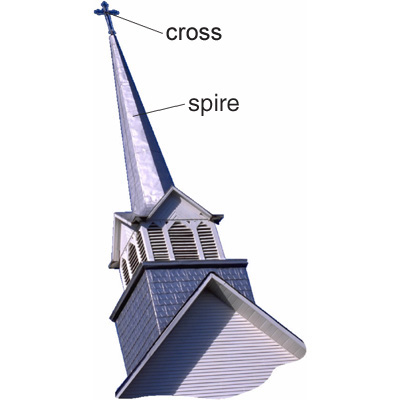
b. an object, picture, or mark in the shape of a cross, used as a sign of the Christian faith or for decoration:
Pauline wore a tiny gold cross.
4. PUNISHMENT an upright post of wood with another crossing it near the top, that people in the past were fastened to with nails and left to die on as a punishment
5. MILITARY AWARD a decoration in the shape of a cross that is given to someone as an honour, especially for military courage:
He was awarded the George Cross.
6. SPORT
a. a kick or hit of the ball in a sport such as football, hockey etc, that goes across the field
b. a way of hitting someone in the sport of boxing, in which your arm goes over theirs as they try to hit you:
He caught his opponent with a right cross to the chin.
7. PROBLEM if you describe something as the cross that someone has to bear, you mean it is a problem that makes them very unhappy or worried, and that continues for a long time:
I feel sorry for you, but we all have our crosses to bear.
⇨ the sign of the Cross at sign1(10)
cross3 S2 adjective [usually before noun] especially British English
angry or annoyed
get/be cross (with somebody)
She gets cross when he goes out drinking.
Sometimes I get very cross with the children.
cross at/about
She was cross at being interrupted.
—crossly adverb
▪ angry feeling strong emotions because you think someone has behaved badly, or because a situation seems bad or unfair: He gets really angry if people keep him waiting. | a crowd of angry protesters
▪mad [not before noun] informal angry: Dad was mad at me for damaging the car.
▪cross [not before noun] spoken rather angry – used when speaking to people you know well: She was cross with me for being late.
▪annoyed [not before noun] a little angry: I was annoyed no one had told me the class was cancelled.
▪irritated annoyed and impatient, especially by something that keeps happening or something someone keeps saying: I was irritated by their stupid questions. | an irritated voice
▪bad-tempered becoming annoyed or angry easily: a bad-tempered old man | He’s always bad-tempered when he doesn’t get what he wants.
▪in a bad/foul mood feeling a little angry for a period of time, often for no particular reason: I woke up in a bad mood. | She’s been in a foul mood all morning.
▪in a huff /hʌf/ in an angry mood for a short time, especially because someone has just said something to offend or annoy you: He walked off in a huff when they refused to let him join in their game.
▪somebody has got up on the wrong side of the bed informal used when you think someone has been in an angry mood all day, for no particular reason – often used humorously: I don’t know what’s wrong – she must have got up on the wrong side of the bed today.
| I |
verb1. GO FROM ONE SIDE TO ANOTHER [intransitive and transitive] to go or stretch from one side of something such as a road, river, room etc to the other
cross to
cross (over) the road/street/river etc
cross the Atlantic/the Channel etc
cross over
2. CROSS A LINE ETC [transitive] if you cross a line, track etc, you go over and beyond it:
3. TWO ROADS/LINES ETC [intransitive and transitive] if two or more roads, lines, etc cross, or if one crosses another, they go across each other:
4. LEGS/ARMS/ANKLES [transitive] if you cross your legs, arms, or ankles, you put one on top of the other:
5. cross sb’s mind [usually in negatives] if you say that an idea, thought etc never crossed your mind, you mean that you did not think of it
SYN occur to somebody:
the thought has (never) crossed my mind (=used to tell someone you have thought of the thing they are suggesting, or have never thought of it)
6. cross sb’s face written if an expression crosses someone’s face, it appears on their face:
7. cross your fingers used to say that you hope something will happen in the way you want:
8. BREED OF PLANT/ANIMAL [transitive] to mix two or more different breeds of animal or plant to form a new breed ⇨ crossbreed:
cross something with something
9. sb’s paths cross (also cross paths) if two people’s paths cross, or if they cross paths, they meet, usually without expecting it:
10. cross that bridge when you come to it used to say that you will not think or worry about something until it actually happens
11. cross my heart (and hope to die) spoken informal used to say that you promise that you will do something, or that what you are saying is true
12. MAKE SOMEBODY ANGRY [transitive] to make someone angry by opposing their plans or orders:
13. SPORT [intransitive and transitive] to kick, throw, or hit the ball across the playing area in a sport such as football, hockey etc
14. CHEQUE [transitive] British English to draw two lines across a cheque to show that it must be paid into the bank account of the person whose name is on it
15. LETTERS [intransitive] if two letters about the same subject cross in the post, each was sent before the other was received
16. cross swords (with somebody) to argue with someone:
17. cross yourself to move your hand across your upper body in the shape of a cross as a sign of the Christian faith
18. cross sb’s palm with silver especially British English to give money to someone when you want them to tell your fortune
⇨ dot the i’s and cross the t’s at dot2(4), ⇨ cross the Rubicon at Rubicon
| THESAURUS |
▪
▪
▪
▪
▪
▪
▪
▪
▪
cross something ↔ off (also cross something off something) phrasal verb
to draw a line through one or more things on a list because you have dealt with them or they are not needed any more:
cross something ↔ out phrasal verb
to draw a line or lines through something you have written or drawn, usually because it is wrong:
cross over phrasal verb
1. if an entertainer crosses over from one area of entertainment to another, they become successful in the second one as well as the first ⇨ crossover(2)
2. British English old use to die
| II |
noun [countable] Date: 900-1000
Language: Old Norse
Origin: kross, from an unrecorded Old Irish cross, from Latin crux
1. MIXTURE OF THINGS a mixture of two things, breeds, or qualitiesLanguage: Old Norse
Origin: kross, from an unrecorded Old Irish cross, from Latin crux
cross between
2. MARK ON PAPER especially British English
a. a mark (x or +) used on paper, to represent where something is, or where something should be:
b. a mark (x) used on paper to show that something that has been written or printed is not correct:
c. a mark (x or +) used by someone who cannot write, in order to sign their name
3.
CHRISTIAN SIGN
a. the cross the cross that Jesus Christ died on:
b. an object, picture, or mark in the shape of a cross, used as a sign of the Christian faith or for decoration:
4. PUNISHMENT an upright post of wood with another crossing it near the top, that people in the past were fastened to with nails and left to die on as a punishment
5. MILITARY AWARD a decoration in the shape of a cross that is given to someone as an honour, especially for military courage:
6. SPORT
a. a kick or hit of the ball in a sport such as football, hockey etc, that goes across the field
b. a way of hitting someone in the sport of boxing, in which your arm goes over theirs as they try to hit you:
7. PROBLEM if you describe something as the cross that someone has to bear, you mean it is a problem that makes them very unhappy or worried, and that continues for a long time:
⇨ the sign of the Cross at sign1(10)
| III |
adjective [usually before noun] especially British Englishangry or annoyed
get/be cross (with somebody)
cross at/about
—crossly adverb
| THESAURUS |
▪
▪
▪
▪
▪
▪
▪
▪