earth
earth1 S2 W2 /ɜːθ $ ɜːrθ/ 
 noun
noun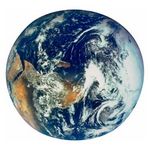
1. WORLD (also Earth) [singular, uncountable] the planet that we live on:

the planet Earth
the earth
The earth revolves around the sun.
the earth’s surface/atmosphere/crust etc
71% of the earth’s surface is sea.
on earth
the origin of life on Earth
2. SOIL [uncountable] the substance that plants grow in
SYN soil
soft/bare/damp etc earth
footprints in the wet earth
a lump of earth
3. LAND [uncountable] the hard surface of the world, as opposed to the sea or air
SYN ground:
The earth shook.
They watched the kite fall back to earth.
4. what/why/how etc on earth ...? spoken used to ask a question when you are very surprised or angry:
What on earth did you do that for?
5. cost/pay/charge the earth informal to cost etc a very large amount of money:
It must have cost the earth__
6. the biggest/tallest/most expensive etc ... on earth the biggest etc example of something that exists:
the most powerful man on earth
7. RELIGION [uncountable] used in religion to refer to the time when people are alive as opposed to being in heaven or hell:
Jesus’ time on earth ⇨ move heaven and earth at heaven(9), ⇨ hell on earth at hell1(2)
8. come back/down to earth (with a bump) to stop behaving or living in a way that is not practical:
She soon brought him back down to earth.
9. no ... /nothing on earth used to emphasize that you mean nothing at all:
Nothing on earth would have persuaded me to go.
There’s no reason on earth why you should tell him.
10. look/feel etc like nothing on earth British English to look or feel very strange:
The next morning I felt like nothing on earth.
11. ELECTRICITY [countable usually singular] British English a wire that makes a piece of electrical equipment safe by connecting it with the ground
SYN ground American English
12. ANIMAL’S HOME [countable] the hole where a wild animal such as a fox lives ⇨ den, lair
13. go to earth British English to hide in order to escape from someone who is chasing you
SYN go to ground
14. run somebody/something to earth British English to find someone, especially by looking in many places
⇨ down-to-earth, ⇨ promise somebody the moon/the earth at promise1(3), ⇨ the salt of the earth at salt1(2)
■ nouns
▪the Earth’s surface Over seventy percent of the Earth’s surface is covered by ocean.
▪the Earth’s crust Volcanoes and earthquakes occur where there is movement in the Earth’s crust.
▪the Earth’s core (=central part) The Earth’s inner core is almost entirely composed of iron.
▪the Earth’s mantle (=parts around the central core) the incredibly high temperatures and pressures deep within Earth’s mantle
▪the Earth’s atmosphere The Earth’s atmosphere blocks off all radiation from space other than light and radio waves.
▪the Earth’s gravity the continual pull of the Earth’s gravity on the Moon.
▪the Earth’s orbit The rocket left the Earth's orbit and set off to Mars.
▪the Earth’s rotation Has the Earth’s rotation always been the same?
▪the Earth’s axis Over thousands of years, the direction of Earth’s axis slowly changes.
▪the Earth’s climate The level of carbon dioxide in the atmosphere has an influence on the Earth’s climate.
■ verbs
▪orbit The Earth orbits the Sun once a year, and the Moon orbits the Earth approximately every 27 days.
▪revolve/rotate Because of the direction in which the Earth revolves, the sun always rises in the east and sets in the west.
▪go round/around Why does the Earth goes around the Sun?
■ phrases
▪Planet Earth the origin of life on Planet Earth
■ adjectives
▪soft The wheels got stuck in the soft earth.
▪hard It hadn’t rained for weeks and the earth was hard.
▪bare (=not covered by trees or grass) There were no flowers or grass, just bare earth.
▪fertile This earth is not fertile enough to produce crops.
▪freshly-dug The poppy seeds were planted in the freshly-dug earth.
▪moist/damp I slipped on the damp earth and fell over.
■ phrases
▪a mound of earth (=a pile of earth that looks like a small hill) A mound of earth lay beside the grave.
▪a clod/clump of earth (=a lump of earth) The horse’s hooves kicked up great clods of earth.
▪ Earth/the Earth the planet we live on - used especially when talking about this in relation to other planets and to space. Also used when talking about being on the ground as opposed to being in the sky: The Earth moves around the sun. | The space shuttle returned to Earth safely. | It’s the highest mountain on Earth.
▪the world the planet we live on – used when talking about all the people, countries, places etc on it: He’s one of the richest men in the world. | Sir Francis Drake was the first Englishman to sail around the world.
▪land the solid dry part of the Earth’s surface: After weeks at sea, the sailors saw land.
▪the globe the world – used especially when you want to emphasize that something happens in or comes from every part of the world: a meeting of scientists from around the globe | There has been an increase in skin cancer across the globe. | The network is accessible from any point on the globe.
earth2 verb [transitive]
British English to make electrical equipment safe by connecting it to the ground with a wire
SYN ground American English:
Make sure that the machine is properly earthed.
| I |
noun Word Family: noun: earth, earthling, earthiness; adjective: earthy, earthly ≠ unearthly, earthen; verb: unearth; adverb: earthward(s)
Language: Old English
Origin: eorthe
Origin: eorthe
1. WORLD (also Earth) [singular, uncountable] the planet that we live on:
the earth
the earth’s surface/atmosphere/crust etc
on earth
2. SOIL [uncountable] the substance that plants grow in
SYN soil
soft/bare/damp etc earth
3. LAND [uncountable] the hard surface of the world, as opposed to the sea or air
SYN ground:
4. what/why/how etc on earth ...? spoken used to ask a question when you are very surprised or angry:
5. cost/pay/charge the earth informal to cost etc a very large amount of money:
6. the biggest/tallest/most expensive etc ... on earth the biggest etc example of something that exists:
7. RELIGION [uncountable] used in religion to refer to the time when people are alive as opposed to being in heaven or hell:
8. come back/down to earth (with a bump) to stop behaving or living in a way that is not practical:
9. no ... /nothing on earth used to emphasize that you mean nothing at all:
10. look/feel etc like nothing on earth British English to look or feel very strange:
11. ELECTRICITY [countable usually singular] British English a wire that makes a piece of electrical equipment safe by connecting it with the ground
SYN ground American English
12. ANIMAL’S HOME [countable] the hole where a wild animal such as a fox lives ⇨ den, lair
13. go to earth British English to hide in order to escape from someone who is chasing you
SYN go to ground
14. run somebody/something to earth British English to find someone, especially by looking in many places
⇨ down-to-earth, ⇨ promise somebody the moon/the earth at promise1(3), ⇨ the salt of the earth at salt1(2)
| COLLOCATIONS |
| (for Meaning 1) |
▪
▪
▪
▪
▪
▪
▪
▪
▪
▪
■ verbs
▪
▪
▪
■ phrases
▪
| COLLOCATIONS |
| (for Meaning 2) |
▪
▪
▪
▪
▪
▪
■ phrases
▪
▪
| THESAURUS |
▪
▪
▪
| II |
verb [transitive]British English to make electrical equipment safe by connecting it to the ground with a wire
SYN ground American English: