massage
mas‧sage1 /ˈmæsɑːʒ $ məˈsɑːʒ/ 
 noun [uncountable and countable]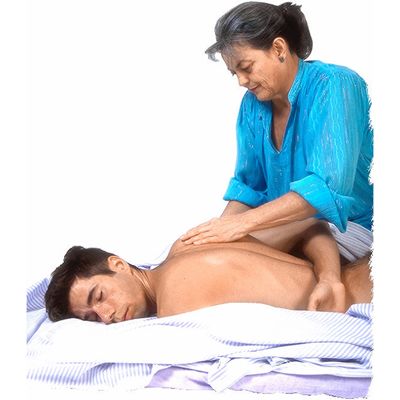
the action of pressing and rubbing someone’s body with your hands, to help them relax or to reduce pain in their muscles or joints:

Massage helps ease the pain.
Why don’t you have a massage?
Joan gave me a gentle neck massage.
body/shoulder/foot etc massage
A full-body massage lasts around one hour.
massage2 verb [transitive]
1. to press and rub someone’s body with your hands, to help them relax or to reduce pain in their muscles:
Alex massaged Helena’s aching back.
massage something into something
Gently massage the lotion into your skin.
2. to change official numbers or information in order to make them seem better than they are – used in order to show disapproval
SYN cook the books:
Myers accused the government of deliberately massaging the unemployment figures.
3. massage sb’s ego to try to make someone feel that they are important, attractive, intelligent etc:
The portrait painter had the power to massage the king’s ego or to expose his flaws.
| I |
noun [uncountable and countable] Date: 1800-1900
Language: French
Origin: masser 'to massage', from Arabic massa 'to stroke'
Language: French
Origin: masser 'to massage', from Arabic massa 'to stroke'
the action of pressing and rubbing someone’s body with your hands, to help them relax or to reduce pain in their muscles or joints:
body/shoulder/foot etc massage
| II |
verb [transitive]1. to press and rub someone’s body with your hands, to help them relax or to reduce pain in their muscles:
massage something into something
2. to change official numbers or information in order to make them seem better than they are – used in order to show disapproval
SYN cook the books:
3. massage sb’s ego to try to make someone feel that they are important, attractive, intelligent etc: