piano
pi‧an‧o1 S3 /piˈænəʊ $ -noʊ/ 
 noun (plural pianos) [countable]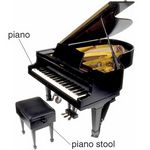
a large musical instrument that has a long row of black and white keys. You play the piano by sitting in front of it and pressing the keys:

Jean accompanied her on the piano.
a piano lesson/teacher etc
a wonderful piano player
■ verbs
▪play the piano Can you play the piano?
▪play something on the piano We all sang while Mum played something on the piano.
▪learn the piano He wanted his children to learn the piano.
▪practise the piano British English, practice the piano American English I would practise the piano for three or four hours a day.
▪sit (down) at the piano She sat down at the piano and began to play.
▪accompany somebody on the piano (=play the piano while someone sings or plays a different instrument) Lisa sang while George accompanied her on the piano.
■ piano + NOUN
▪piano music You can listen to live piano music while you dine.
▪a piano player
▪a piano teacher
▪a piano lesson I started having piano lessons.
▪piano practice Have you done your piano practice?
piano2 adjective, adverb technical
played or sung quietly
OPP forte
| I |
noun (plural pianos) [countable] Date: 1800-1900
Language: Italian
Origin: pianoforte, from piano e forte 'quiet and loud'
Language: Italian
Origin: pianoforte, from piano e forte 'quiet and loud'
a large musical instrument that has a long row of black and white keys. You play the piano by sitting in front of it and pressing the keys:
a piano lesson/teacher etc
| COLLOCATIONS |
▪
▪
▪
▪
▪
▪
■ piano + NOUN
▪
▪
▪
▪
▪
| II |
adjective, adverb technicalplayed or sung quietly
OPP forte