stomach
stom‧ach1 S3 W3 /ˈstʌmək/ 
 noun [countable]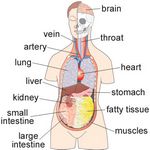
1. the organ inside your body where food begins to be digested:

I was so hungry my stomach hurt.
His stomach was full of food.
2. the front part of your body, below your chest:
He turned round and punched Carlos in the stomach.
3. do something on an empty stomach to do something when you have not eaten:
You shouldn’t take the pills on an empty stomach.
4. turn your stomach to make you feel sick or upset:
The sight of the slaughtered cow turned my stomach.
5. have no stomach for a fight/task etc to have no desire to do something difficult, upsetting, or frightening
6. have a strong stomach to be able to see or do things that are unpleasant without feeling sick or upset:
Don’t go and see this film unless you have a strong stomach.
■ adjectives
▪full (=full of food) A lot of these children don't know what it is like to have a full stomach.
▪empty (=with no food in) It was 11 o'clock, and my stomach was empty.
▪an upset stomach (=a stomach affected by illness) Debbie was at home because she had an upset stomach.
■ stomach + NOUN
▪(a) stomach ache I had terrible stomach ache last night.
▪stomach pains/cramps He complained of acute stomach pains.
▪a stomach bug (=an illness you have caught that affects your stomach) He's off work with a stomach bug.
▪a stomach upset (=when your stomach is affected by illness) The boy had a stomach upset after eating berries from the garden.
▪a stomach ulcer Too much stress can cause stomach ulcers.
▪stomach cancer She was diagnosed with stomach cancer last year.
■ verbs
▪somebody's stomach rumbles (=it makes a noise because they are hungry) She felt her stomach rumble.
▪somebody's stomach churns (=they feel sick because they are nervous or frightened) Her stomach was churning with anxiety.
▪somebody's stomach lurches/tightens (=it suddenly feels tight because they are frightened) Her stomach lurched at the thought of leaving Millfield.
▪settle somebody's stomach (=to stop it feeling uncomfortable) The doctor gave me some tablets to settle my stomach.
stomach2 verb [transitive usually in negatives]
1. to be able to accept something, especially something unpleasant
SYN endure:
A 26% water rate increase is more than most residents can stomach.
hard/difficult to stomach
Rob found Cathy’s attitude hard to stomach.
2. to eat something without becoming ill:
I’ve never been able to stomach seafood.
| I |
noun [countable] Date: 1300-1400
Language: Old French
Origin: estomac, from Latin stomachus 'throat, stomach', from Greek stomachos, from stoma 'mouth'
Language: Old French
Origin: estomac, from Latin stomachus 'throat, stomach', from Greek stomachos, from stoma 'mouth'
1. the organ inside your body where food begins to be digested:
2. the front part of your body, below your chest:
3. do something on an empty stomach to do something when you have not eaten:
4. turn your stomach to make you feel sick or upset:
5. have no stomach for a fight/task etc to have no desire to do something difficult, upsetting, or frightening
6. have a strong stomach to be able to see or do things that are unpleasant without feeling sick or upset:
| COLLOCATIONS |
▪
▪
▪
■ stomach + NOUN
▪
▪
▪
▪
▪
▪
■ verbs
▪
▪
▪
▪
| II |
verb [transitive usually in negatives]1. to be able to accept something, especially something unpleasant
SYN endure:
hard/difficult to stomach
2. to eat something without becoming ill: